
.jpg)



Speeches and Transcripts
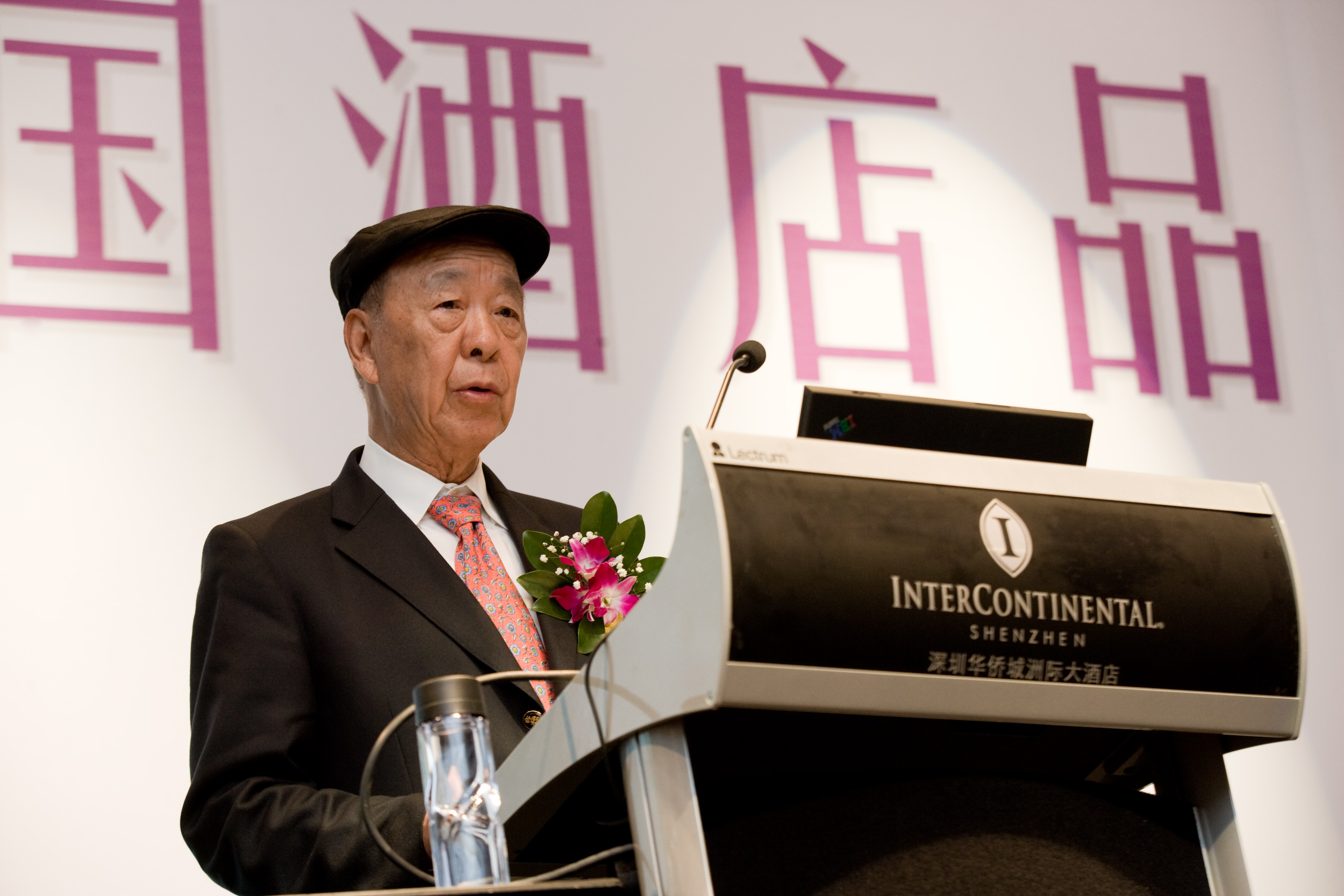
International Forum on China Hotel Brand Development:
Development trends and Brand-building for China’s Hotel Industry
03 July 2007
Conference room, InterContinental Shenzhen, Overseas Chinese Town, Shenzhen
The Honorable Deputy Director Liu Zepeng (劉澤彭), Vice- Mayors Zhuo Qinrui (卓欽銳), Deputy Department Chief Liu Shijun (劉仕軍), Bureau Chief Li Xiaogan (李小甘), Professor Chon, Professor Zhang Zhengkui (張整魁), dear guests:
First of all, I must thank the organizing committee of The Hong Kong Polytechnic University (“PolyU”) and Guangzhou Jinan University for giving me the opportunity to reflect on China’s hotel industry and brand development with friends in the industry. I am going to share with you my views on the development of the hotel industry in the Greater China region in the future from the perspectives of an investor, a hotel operator and an ordinary tourist, drawing on my experience in hotel operation and management over the years.
Customer satisfaction as the benchmark for service standards
Since the opening of the first InterContinental Grand Stanford in Tsimshatsui East, Hong Kong, I have been investing in the hotel industry for nearly 30 years. I dare say I am among the first generation of Hong Kong businessmen building hotels in the city and operating them under foreign brands. I am operating more than 20 hotels in Hong Kong, Macau and the United States. I am also very fond of traveling. As an avid tourist, I have first-hand experience of the services and facilities of hotels around the world.
As a hotel investor, I like to stay at hotels recommended for their special themes, feature services or architectural characteristics, in order to learn from others. As an enthusiastic traveler, I would of course like to have a good rest in a comfortable room after a long journey. I once checked in an ultra-luxurious hotel in Shanghai which was characterised by its cyber looks and technologically advanced facilities and which had won unrivaled acclaim as an exemplary 5-star hotel. However, when I tried to adjust the temperature of the air-conditioner that evening, I had little luck tampering with the hi-tech-looking control board. Feeling stupid, I called the hotel manager for help and it took quite a while before I could finally go to bed in peace.
On another occasion, I checked in a 5-star hotel and planned to get some good rest before anything else. Naturally, I turned off all lights using the master switch. However, when I woke up in the middle of the night and tried to turn on the lights again, I couldn’t do it through the master switch. I had to walk around in the dark to locate the right switches, without much success. You can tell this was a very frustrating experience.
What I want to point out through these two examples is that, expensive and fashionable “hi-tech” products are no guarantee of quality services. Many hotels boast avant-garde elements in their designs, but very often user-friendliness has been neglected, resulting in disturbance and negative feelings for customers. This is a mistake of sacrificing the ends for the means.
Hotel operation is a complex business that requires a high level of practicality. From accommodation, dining, security, communication, conference facilities to secretarial services, we must provide instant, user-friendly and personalised solutions with meticulous attention to details, while projecting an image in keeping with the times.
The hotel business is not part of the property business
Many people have regarded hotel operations as a part of property development. This is an entirely wrong idea. I have debated with many government officials and even academics about this. If you are a property agent dealing with complaints from the buyer or tenant, you would have a few days’ time to solve the problem. Moreover, it is not likely that an average buyer would visit you again to buy a second flat within a short period (unless he is a speculative buyer, in which case he wouldn’t bother to check carefully if there are any defects). At the hotel, however, I have seen guests complaining all night to the duty manager about water temperature, acoustics, air-conditioning and other issues that you couldn’t possibly have imagined. If the hotel is not able to solve the problems instantly to the satisfaction of the guest, he will lose faith in the hotel and it’s not likely that he will visit again. And the survival of a hotel is largely dependent on its ability to retain guests, that is, to have them visit again.
Brand name: an important intangible asset
Hong Kong is a metropolitan city where premium hotels with luxurious facilities can be readily found. However, after more than 30 years of development, most hotels in Hong Kong are still operated on a franchise basis under the brand names of European or American hotel chains, such as Four Seasons, InterContinental, JW Marriott, Hyatt, Crowne Plaza and Sheraton, etc, even though most of them are actually owned by local investors. Why is it so?
Before probing this issue, I would like to draw your attention first to the idea of a successful brand. More than a name or a trademark, it embodies a pledge for product and service quality and imparts implicit values, ideas and personality in a particular product or service. Over time, such elements form the customer’s perception of, recognition for, or even long-term loyalty to the brand.
Furthermore, brand name is an important intangible asset of a company which has a significant bearing on its valuation, turnover and goodwill. Brand name is often used as a factor in the evaluation of a company’s profitability.
A recent edition of Business Week has ranked the world’s top 100 valuable brands in 2006, including household names such as Coca Cola and McDonald’s, whose brand valuations were estimated at USD67.0 billion and USD27.5 billion, respectively. The central importance of brand name to a company is underlined by the fact that the brand valuation of McDonald’s was almost equivalent to its overall market capitalisation.
The success of a franchise operation is dependent on its brand name effect
The brand reputation of a hotel is built through the provision of services with unique value, such that guests always resort to this brand as an assurance for quality every time they travel again. InterContinental Grand Stanford, for example, has many loyal customers who have been returning patrons for nearly 20 years, as we know every detail of their unique habits.
There’s no denying that international hotel groups have firmly established their brand names in Hong Kong and the Mainland. In addition to the right of using their brands, these hotel chains also provide hotel investors with all types of supporting services, such as day-to-day operation, staff training, procurement and marketing, in order to ensure service quality and brand consistency. Meanwhile, the extensive room reservation network of these hotel groups provides member hotels with an enormous base of potential customers.
Because of these reasons, most local owners of hotels in Hong Kong continue to prefer to operate on a franchise basis, despite having to pay expensive franchise fees and other service fees.
You may wonder why local hotel brands of Hong Kong have not been competing in the international market, when Hong Kong investors have clearly reached international levels in terms of financial strengths and management skills, and are considerably experienced in hotel operations as well?
First of all, Hong Kong has a relatively small population, and the size of the local economy is not large enough to sustain sufficient domestic demand for hotels. As an export-driven economy, Hong Kong must rely on foreign tourists if it wants to develop local hotel brands.
In Europe and America, however, a certain degree of protectionism for the local hotel industry is practiced. Governments have adopted measures such as the stipulation of designated percentages for local shareholdings and high entry barriers for foreign brands. This is another reason why hotel investors of Hong Kong find it difficult to establish their brands in the international market.
China’s strong domestic demand and trade growth as a probable driver for hotel brands
As for the hotel market of China, there is a strong foundation on which Chinese hotel brands can be built. Domestic demand is the principal driving force underpinning the development and expansion of China’s hotel market.
The rapid development of business traveling and leisure tourism, driven by the influx of global companies to engage in this massive economy coupled with the continuous growth in the per capita income of Chinese people in the wake of China’s phenomenal economic growth in recent years, has provided a major boost to the demand for hotels. Meanwhile, owing to the importance of family in Chinese culture, the demand for leisure tourism as a means of family gathering will also be an important driver of the future development of China’s hotel industry.
Given the double-digit annual growth in per capita income and the increasing affluence of small business owners, holiday travelling as compensation for hard work has become an increasingly popular trend. Tourism spending is also often regarded as an indication of social status. As such, the demand for premium holiday resorts with a variety of entertainment and leisure facilities that suit every member of the family will continue to increase.
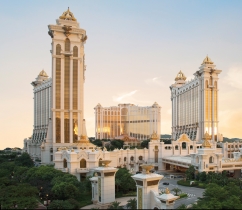
Galaxy World Resort, a mega-size entertainment and holiday resort in Cotai currently under construction, as well as StarWorld Hotel, have been developed in Macau by Galaxy Entertainment Group (“GEG”) under K. Wah Group in response to this anticipated major trend in retail spending and tourism.
In fact, the hotel sectors of Hong Kong and Macau have also benefited from China’s robust domestic demand in recent years. In 2006, Hong Kong and Macau recorded 27 million and 24 million visitor arrivals respectively, with Mainland Chinese tourists accounting for more than half of the figures. Since its opening in last October, StarWorld Hotel has maintained consistently high occupancy rates, while overbooking has been a normal scene for weekends. It is a good example of hotels benefiting from China’s domestic demand.
Visitor arrivals increasing year by year
Meanwhile, China herself is a favourable tourist destination with many attractions: gorgeous natural landscapes, historic and cultural monuments, and oriental cuisines well-loved by Westerners. Coupled with increasingly frequent international business conventions, exhibitions and forums and global events such as Beijing Olympics 2008 and Shanghai Expo 2010, China’s tourism industry is set for further growth. In fact, visitor arrivals in China has been increasing and, according to the forecast of the World Tourism Organization (UNWTO), China will take over France, the United States and Spain to become the world’s largest tourism destination by 2020. The arrival of hundred millions of tourists each year will certainly drive further demand for domestic hotels.
Moreover, the Central Government has also listed the development of inbound tourism as one of the key objectives for the “11th Five-Year Plan Summary”. The China National Tourism Administration has enhanced market research and made proactive moves in market development. Promotion of the general image of the nation has been strengthened to increase China’s appeal to international travelers as a destination for leisure tourism.
Why do we need more Chinese brands?
At present, China has yet to groom prominent brand names with international standing. While local hotel operators with considerable fame in the domestic market, such as the recently listed Jin Jiang Group, or hotels under China Travel Service Group (“CTS”) or Guangdong Tours Group, have made strong efforts in brand building in recent years, they remain little known to most foreign tourists, who prefer familiar foreign hotel brands which they have more faith in. To be honest, the same holds true for me.
Domestic Chinese hotels still lags behind top-rate international hotel groups because the market-based economy did not emerge in China until about 20 years ago. For many previously State-owned hotel groups, corporatisation did not take place until recent years. Their sensitivity to market trends is yet to be sharpened.
Moreover, while it might be easy to replicate magnificent architectures and advanced facilities for hotels, what really determines the success of hotel operations is staff quality, reflected in aspects such as the mentality of the management team and the quality of services rendered by front-desk personnel, which would take more than a couple of years to improve.
Hotel management of top standards requires broad perspectives on the part of the management, coupled with the determination to maintain service quality and make comprehensive plans for the benefit of the customers. Front-desk staff must also demonstrate a stronger sense of commitment. They need to work proactively to serve the best interests of guests and constantly exceed customers’ expectations with thoughtful acts and heartwarming smiles. The provision of attentive and personalised services is crucial to brand success.
Sharing: Blending Chinese and Western characteristics in the management of StarWorld Hotel
How should a hotel operator address competition from international brands and rising customer expectations? I would like to provide some food for thoughts through the example of StarWorld Hotel, which was opened last year.
Currently, 95% of the tourists visiting Macau are Chinese, while our competitors are mega-size international groups with a long history in the industry. During the initial preparations, we spent a lot of time planning for the creation of a cultural style unique to Macau that blends effective Western management systems with the empathetic qualities of Oriental people in an upgrade to the traditional business style of Macau’s entertainment and tourism industries. Through overall planning, we have gradually shaped this massive investment project of GEG into a long-term plan for the development of variety tourism.
“Conservation, upgrade and innovation” as principles for development
Based on the investment philosophy and strengths described in the foregoing, GEG follows the three principles of “conservation”, “upgrade” and “innovation” in its development in Macau. First of all, GEG seeks to “conserve” the Macanese and Chinese cultural heritage as Macau’s unique character. Secondly, we hope to “upgrade” the efficiency of existing operations and services through the employment of advanced information technologies, based on a management philosophy of blending Chinese and Western characteristics. Meanwhile, in line with the Group’s persistent emphasis on “innovation”, we seek to build a mega-size resort entertainment and convention / exhibition destination that caters to the needs of Asian tourists while bringing delightful surprises to Western tourists.
StarWorld Hotel’s business performance has been encouraging since its opening in less than one year ago. Recently, it has garnered a 5-Star Diamond Award from The American Academy of Hospitality Sciences. This international honour proves that brands created by Hong Kong people can win extensive recognition. Brands built by Chinese are in no way less favourable than international brands.
Training up management professionals with macro-strategic planning ability
I see a long and rocky path ahead for the brand-building of Chinese hotels. A strong supply of hotel managers who are familiar with local cultures are required. The training of management professionals with macro-strategic planning ability is a long-term mission for the hotel industry.
As of now, the key management positions in the hotel industries of Mainland China, Hong Kong and Macau are mostly occupied by expatriates. Few Chinese personnel in the hotel business would make it to the top leadership of hotel groups.
Professor Poon Chung-kwong (President of The Hong Kong Polytechnic University) and I have had many discussions on how the Hotel and Tourism Programme of PolyU might be further developed. Today’s forum co-hosted by PolyU and Guangzhou Jinan University has presented a fine opportunity for government officials, management of domestic and international hotels, and academic experts to exchange their views, and will have profound significance for the promotion of the industry as a whole.
Brand-building: a long-term mission with profound significance
It will take persistent effort, market sensitivity and management acumen for China’s hotel industry to accomplish successful brand-building. If we seize the right opportunities, there is no reason why Chinese businessmen would not have our own proprietary hotel brands in the future.
The hotel industry of China is currently undergoing a stage of thriving growth which will underpin its further development. The question is how hotel operators should prepare themselves for preemptive moves. I suppose we should all start with the basics, and today’s forum has provided an opportunity for us to do just that. It is my sincere hope that the esteemed members of the academic and business communities will continue to investigate future brand-building for Chinese hotels and look for ways to lay a solid foundation for the development of international brands. Thank you.