



.jpg)


Speeches and Transcripts
Dr Che-woo Lui on Entrepreneurship:
Courage, Vision, Integrity and Innovation
23 September 2008
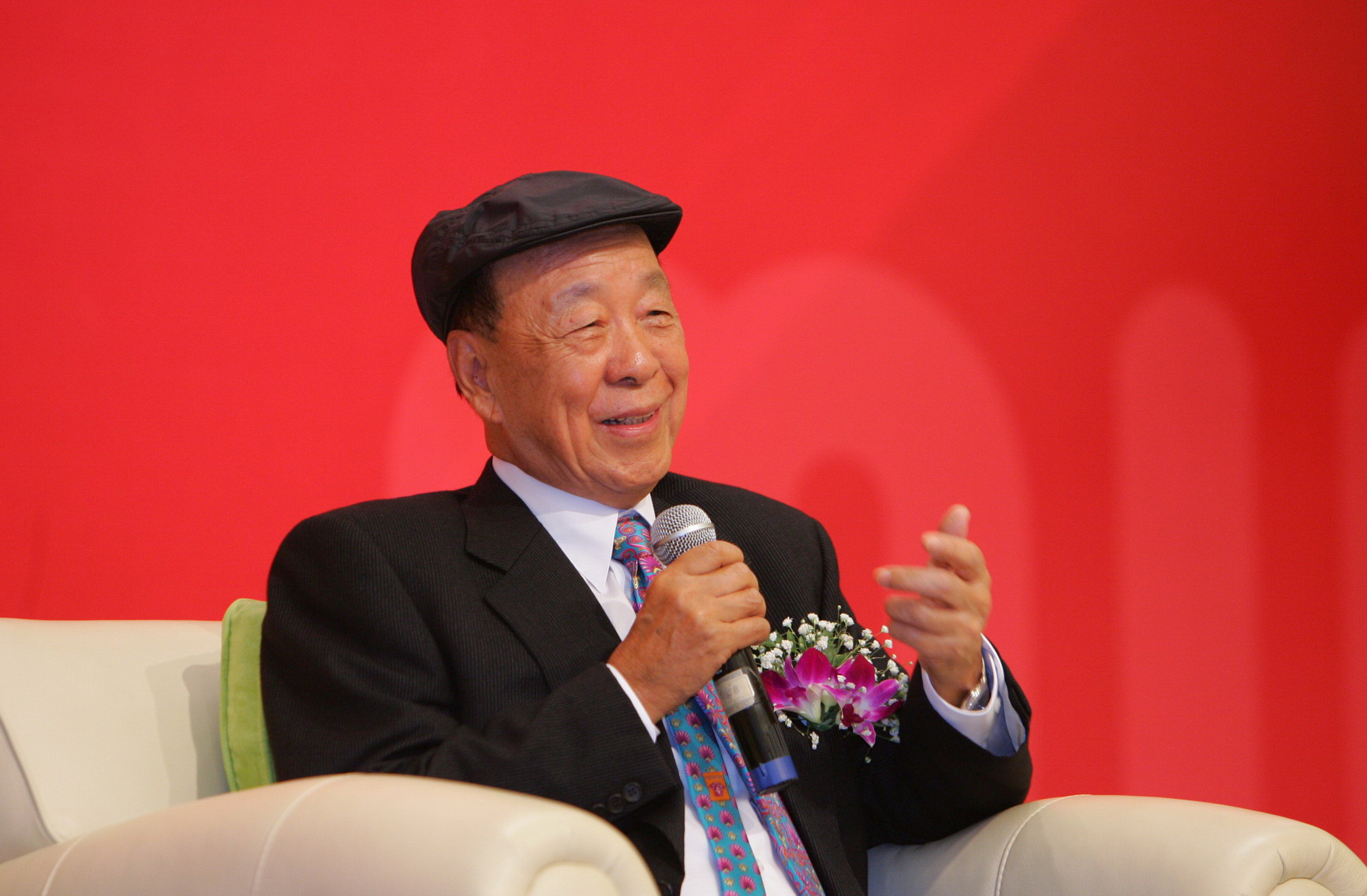
K. Wah Group and Fudan University co-organized “Fudan K. Wah Day” on 23 September 2008, during which a forum Talking to Dr Che-woo Lui, hosted by Professor Lu Xiongwen, Dean of School of Management of Fudan University and Professor Andrew Chan, Associate Dean of Faculty of Business Administration of The Chinese University of Hong Kong was held. The forum captured the attention of the teachers and students of Fudan, where Dr Lui shared his insights on various areas including cross-regional development, glocalization, leadership, talent nurturing, competitiveness, and his philosophy of life.
Lui: Dr Che-woo Lui
Lu: Professor Lu Xiongwen (host)
Chan: Professor Andrew Chan (guest host)
“To tackle difficulties, you need to be innovative. Also, you need to have integrity”
Lu: Dr Lui, K. Wah has evolved from a small company to a multinational corporation as it is today. Is there any experience to share with us?
Lui: First of all, let me thank Fudan University for this opportunity to share about our company. K. Wah was established in 1955 as a construction materials supplier and encountered many difficulties over the decades. To tackle difficulties, you need to be innovative. Also, you need to have integrity, so that you may get help from others when in need. Most important of all, you have to be diligent in order to be successful.
Lu: Integrity is one of the keys to your success. Do you think integrity should be attached with more importance in today’s economic development of Mainland China?
Lui: Your desire to achieve something is only the beginning. Your integrity is then revealed in the process when you devote yourself in working hard to make things happen, earning the trust of others on your capability. China’s open door policy has been in place for nearly three decades, with businesses developing from mainly state-owned to individually owned. There are now many successful individually owned enterprises, which demonstrated a high level of integrity, innovation and audacity to changes.
Chan: This reminds me of an episode of the young Dr Lui who was selling auto parts at the time. He once helped a client to make a big profit. In return, the client wanted to reward him with 200 dollars. Why didn’t you take it?
Lui: 200 dollars was almost equivalent to a three-month salary, but I turned it down. The client was surprised but he let me have my way. Several years later, I encountered a problem in business, and he helped me out when he knew it’s me. This is not what I would plan for. Now if you ask me why not taking it, it may be something about “dignity”.
“When an opportunity arises, it is important to have a fair evaluation of one’s ability.”
Chan: Dr Lui is an interesting person. In 1997, when everyone in Hong Kong was buying assets, he was selling. During the Asian financial crisis, when everybody else was selling, he was buying. Why would you do so?
Lui: We should be aware of the circumstances and changes around us. The time when people are panic to sell is an opportunity for me to grasp. At the peak time, you should decide how much profit is acceptable. Over-aggressive targets may incur high risks. In the low tide of Hong Kong property market, we were the developer which bought most land and made most applications for land to the government. Why do I have such courage? When an opportunity arises, it is important to have a fair evaluation of one’s ability. If financial capability is assured, it then only takes a bit of courage to make the move.
“Whether it be 5, 10 or 20 years, we aim for localization.”
Lu: Dr Lui, you have many investments in the Mainland China and employed a large local workforce. How do you compare the talents in China and in Hong Kong?
Lui: When I first invested in the Mainland China, I was determined to achieve localization. It is not easy since there are huge differences in working styles and cultures between Hong Kong and the Mainland China. But no matter how long it takes, whether it be 5, 10 or 20 years, we aim for localization. We will attract more talents from local universities, introduce to them our systems and philosophies and also learn from them the cultures and practices of China, for better integration.
“For enterprises to develop, a sound management system must be in place.”
Lu: How do you attract top talents? How do you nurture next-generation leaders? These are the common headaches for most Chinese enterprises nowadays.
Lui: For enterprises to develop, a sound management system must be in place. Fudan’s offering of accounting and management science disciplines is timely as these are the most needed knowledge in China. In a brief talk with Professor Wang just now, we discussed about installing a building for Fudan’s School of Management. With a strong pool of management and legal professionals, China will have a stable and healthy development.
“Businessmen aim at making money, where entrepreneurs aim at making contribution to the society.”
Student: Dr Lui, I’m a research student of the School of Management. What are the differences between a businessman and an entrepreneur?
Lui: Businessmen aim at making money and business expansion, where entrepreneurs have a vision and aim at making contribution to the society. For a businessman to become an entrepreneur, it requires sound policies and systems, and legal and government support. I hope that China’s businesses will develop from good to great, with focus not only on money-making, but also on contributing to the society.
Conclusion: Entrepreneurs have a mission to achieve
Lu: Thank you Dr Lui for your inspiring sharing. The 200-dollar story Professor Chan told us has already explained the differences between a businessman and an entrepreneur. A businessman would take the money right away because that is all he wants. For an entrepreneur, he is courageous and visionary, seeing what others don’t, withdrawing from the crazy crowd and grasping opportunities at the worst of times. Secondly, entrepreneurs put integrity first in doing business. With integrity and diligence, there will be a chance of success. Thirdly, entrepreneurs have the capability to create better conditions for business development. Lastly, entrepreneurs integrate the Western and Chinese management styles and get the best from both worlds.