


.jpg)


Speeches and Transcripts
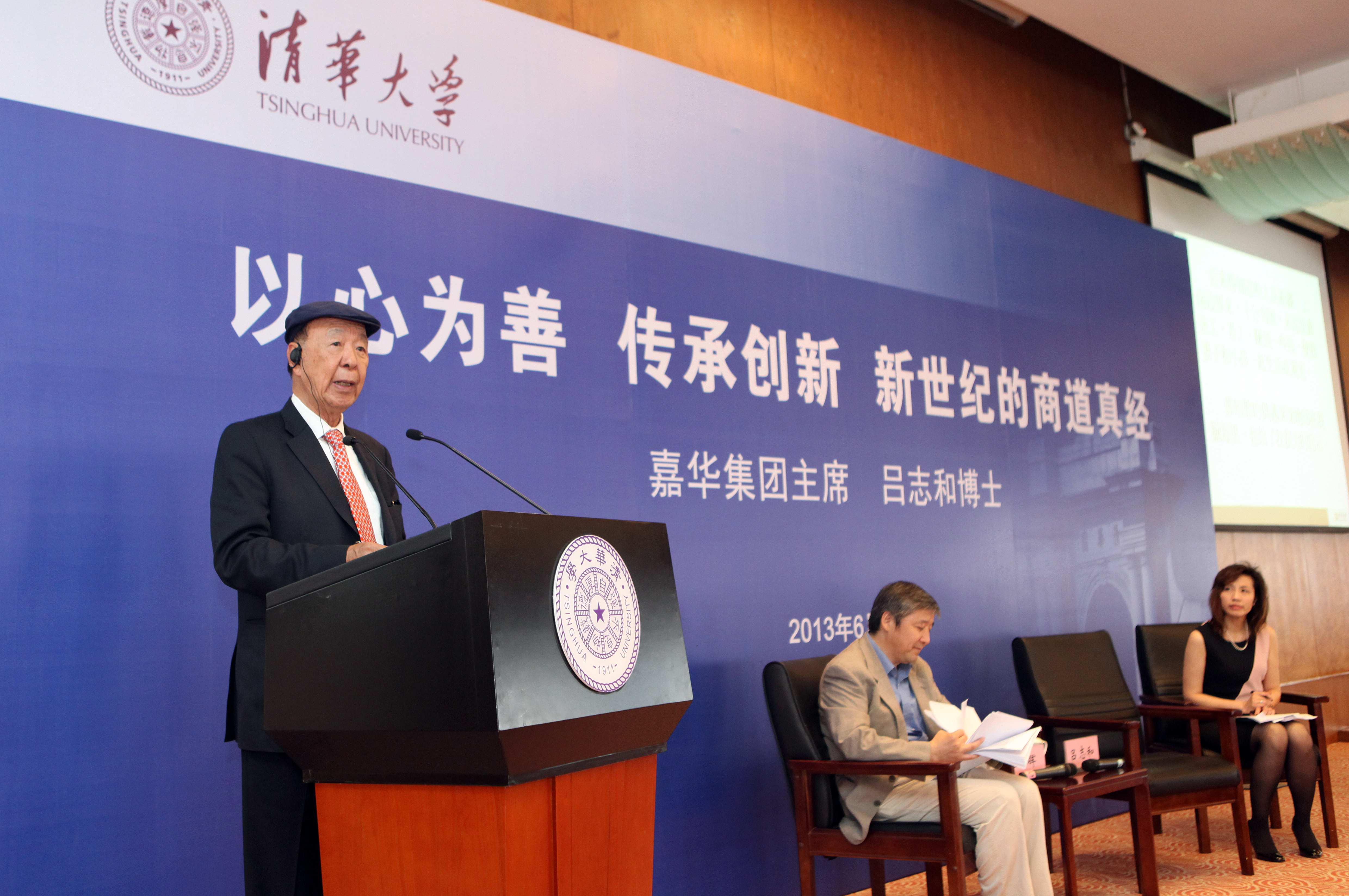
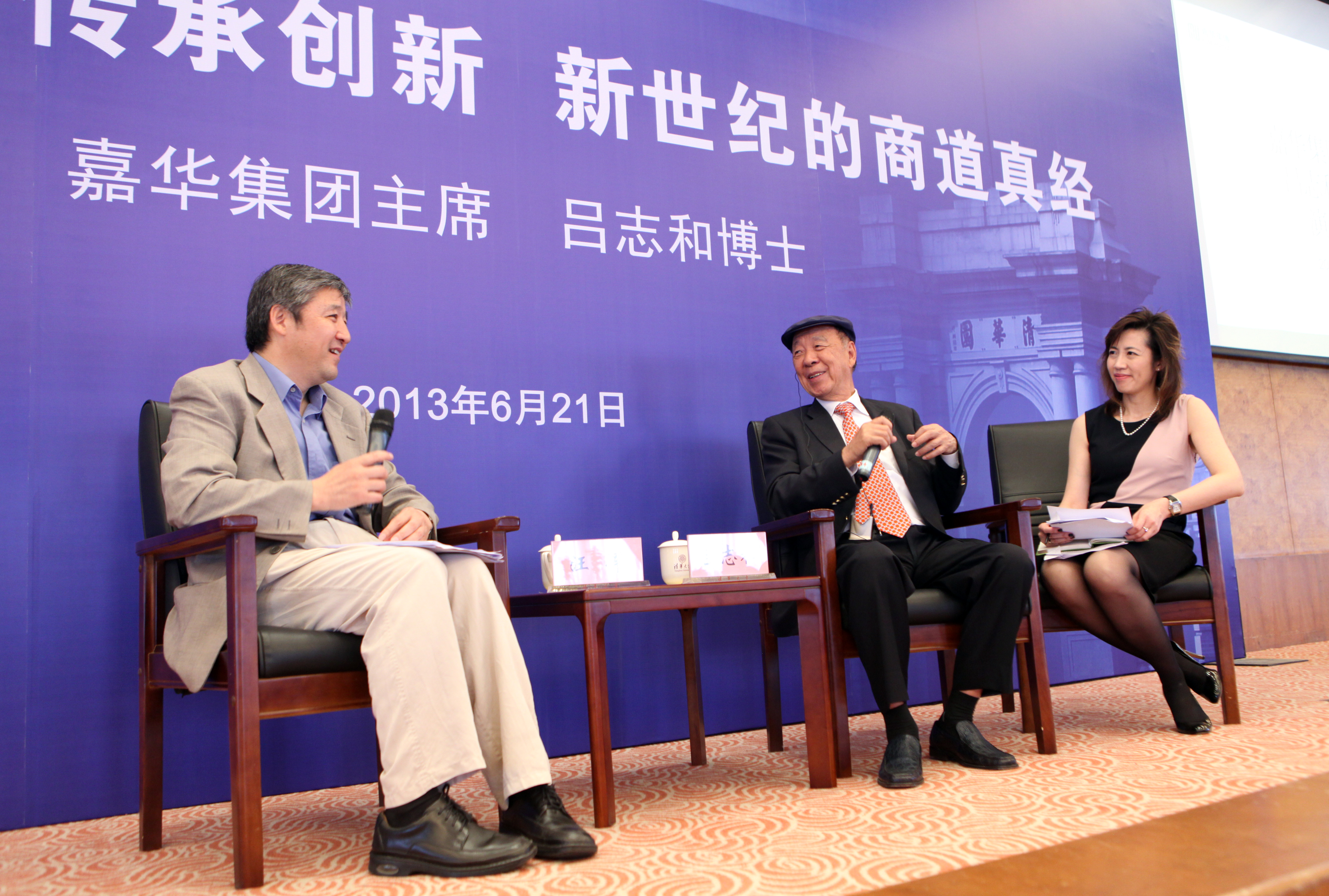
Speech at Tsinghua University
Speech at Tsinghua University
21 June 2013
Reception Hall, Main Block, Tsinghua University
The honourable President Chen Jining, dear teachers, students, guests and members of the media,
Good morning. First of all, I must thank Tsinghua University for the invitation. I would like to thank President Chen, in particular, for taking time out of his busy schedule to arrange this event, giving us a chance to embrace this beautiful campus which has an illustrious history of more than a century and to meet with you. Tsinghua is not well-known in China alone; it is a university of international fame, a cradle to outstanding Chinese individuals, among them are leaders who have contributed to the progress of the nation and the community. Honestly, I feel a bit uneasy in the presence of so many academics and intellectuals here today, for I have received very limited education. I started working in my mid-teens, so I have 70 years of working experience in my bag, and I am very happy to share some of that experience with you.
The young students present here today are the lucky ones. As a child, I didn’t get much education as schools were suspended owing to the Japanese invasion of China. At that time, I always felt upset when people said “all Chinese are illiterate.” It was also owing to the absence of universal education as a matter of statutory requirement. Hence, I very much hoped to make contributions to the nation in this regard after I became successful in business. I once saw a man in Kunming riding a tricycle in a rather dangerous manner, carrying a large load of bricks with his wife and children on board. Later, I learned that people such as him came from the borders of Xinjiang and Yunnan. Poor as they were, they would earn meagre salaries by taking basic labour work, and their wives and children would come to visit them or stay with them.
This brief and incidental meet-up remained in my thoughts and inspired me in a significant way. I wanted to help these villagers in remote mountain areas to lift themselves from the struggle for survival at the bottom of the society and to catch up with the advancement of the outside world. And the only way to do this was to improve education, so that the younger generation would be able to change their fate through knowledge.
After I returned to Hong Kong, I talked to the Central Government Liaison Office in Hong Kong, who told me that there were many more impoverished regions in China. Subsequently, with the help of the Liaison Office, I worked with the Ministry of Education of China to build 122 primary / secondary schools in 8 provinces, through construction or conversion, in five years. I am deeply aware of the importance of education. It is the driving force behind a nation’s rise to prominence and her well-being in the long term. Education also helps to foster harmony between different classes and races. It represents an essential path along which the progress of mankind has taken and will continue to take place.
Therefore, I have always been particularly concerned with elementary education and higher education in China, and have offered genuine assistance in this regard. Fortunately, following the nation’s robust economic and social development, and with the strong support of the government, schools and other enthusiastic parties, education is now much more readily available and schooling conditions have also been substantially improved. Outstanding higher education institutions such as Tsinghua boast top rankings among their international peers, nurturing high-calibre people that would make significant contributions to the development of our nation.
Today, as our society becomes increasingly sophisticated, the qualities in talents required have also changed. In addition to “hard knowledge” or expertise in professional areas gained through diligent studies, we must also equip ourselves with “soft strengths”, by which I mean personal integrity and commitment to serving the nation and the community. In this regard, the motto of Tsinghua - “Constantly improving oneself and embracing all things with a generous spirit” - is spot on. While youngsters should work hard to pursue academic excellence and personal aspirations in the fantastic environment of the university, they should not neglect cultivation in personal virtues, cultural knowledge, social awareness and civic responsibility, but should improve and prepare themselves vigorously with humility and diligence in order to serve the society in the future.
While we are living in a new era that embraces rapid social development and constant advances in information technology, the essence of education has never changed. The university is not merely a platform for academic exchanges. It also prepares youngsters for taking up leadership in the future, a leadership that would inspire our society to go ever forward. Here, we must search for new thinking and breakthrough with a rigorous yet innovative academic approach. We must also nurture our “soft strengths”, by which I mean cultivation in traditional Chinese culture and virtues, in the spirit of charity which seeks to foster virtues in oneself in order to benefit our neighbours.
If this commitment is shared by every one of us, our society will grow in harmony and the vision of driving national development with the support of high-calibre human resources. In this way, we might not be far away from the “realisation of the Chinese Dream” that President Xi Jinping, a distinguished graduate of Tsinghua, has called for. Given this invaluable opportunity to meet with you, I would be most happy to share with you the experiences of my lifetime, and I would also like to hear what you think. Thank you.